Phishing, Smishing Bypass Security Controls

Originally Published: March 6, 2026
Last Updated: June 9, 2026
By Tracey Birkenhauer, journalist and Chief Impact Officer, STACK Cybersecurity
Cybercrime no longer depends on technical sophistication alone. Many of today’s most successful attacks rely on impersonation, timing, and trust instead of malware or other exploits.
Phishing (email) and smishing (text) have evolved into social engineering tactics that mirror normal business activity. Messages look routine, arrive at inconvenient moments, and pressure recipients to act quickly.
Gift card scams, executive impersonation, and fake payment requests are common outcomes, even in environments with modern security tooling.
Understanding how these schemes work, and why they succeed, can reduce exposure.
Phishing Evolution
Traditional phishing emails focused on malicious links and attachments. Modern attacks are subtler. They impersonate vendors, coworkers, or leadership and reference real workflows such as invoices, travel schedules, or internal requests.
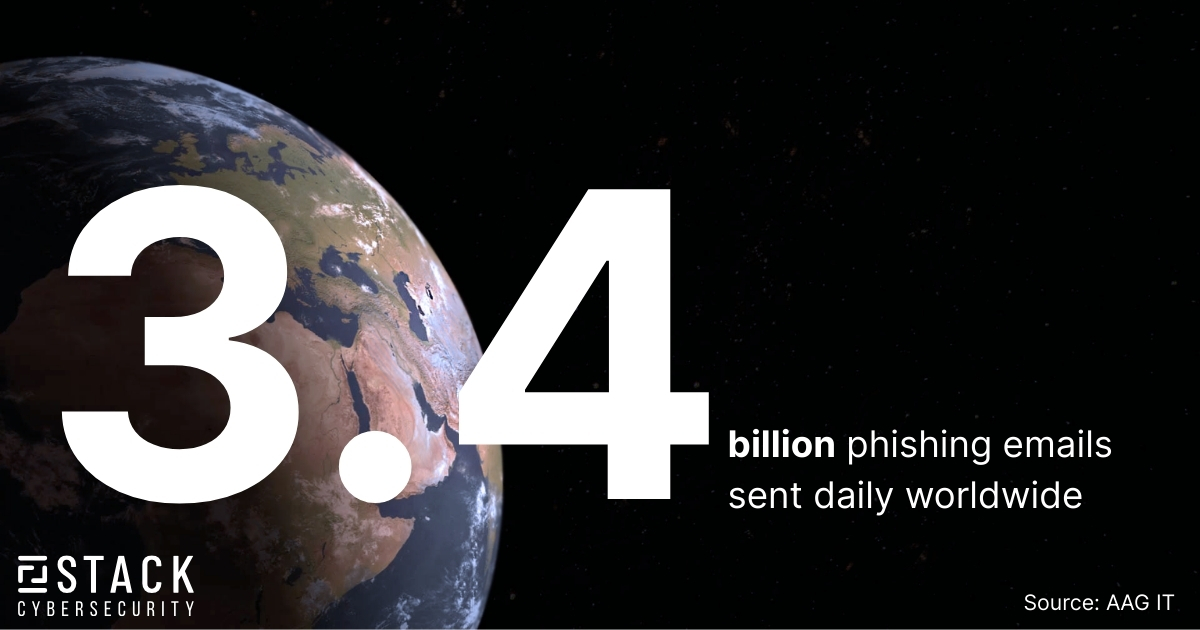
In some cases, messages originate from compromised accounts. In others, hackers rely on displayname deception or lookalike domains. The request itself is usually simple and plausible: handle a payment, review a document, complete a quick task.
When phishing works, it often leads directly to financial fraud, not system compromise.
For more on how credential exposure enables these attacks, see our Password Reset Series, a guide for business leaders, IT teams, and anyone responsible for protecting sensitive data.
Schemes Port to Phones
Smishing, or SMS-based phishing, has become one of the most effective delivery methods for impersonation scams. Text messages feel personal and urgent, and they're almost always read.
Attackers increasingly impersonate executives or supervisors by text, especially when leadership is traveling or unavailable. Employees are asked to help with gift cards, purchases, or confidential tasks. Because these messages arrive on personal devices, they bypass corporate email security entirely.
Smishing doesn't require access to internal systems. A convincing message, sent at the right moment, is often enough.
Why Gift Card Fraud Works
Gift card scams thrive because they exploit gaps between technical controls and human behavior.
Gift cards are fast to purchase and difficult to recover once codes are shared. They don't trigger wire approvals, bank alerts, or fraud reviews. Requests often sound minor or temporary, which lowers resistance.
Criminals rely on urgency and discretion. Employees are asked to act quickly and quietly, reducing the chance of verification. The goal is not technical evasion but behavioral compliance.
STACK Cybersecurity has documented how these scams increasingly target employees directly rather than systems, particularly through text messages and executive impersonation.
Where Password Hygiene Fits in
Even when scams arrive by text message, password hygiene still matters.
Exposed or reused credentials from unrelated breaches can give attackers insight into relationships, job roles, calendars, and contact information. That context allows messages to be timed and personalized in ways that feel legitimate.
Strong, unique passwords and rapid response to credential exposure limit an attacker’s ability to gather this intelligence. They don't eliminate smishing risk on their own, but they reduce the realism and precision of impersonation attempts.
Why Security Tools Aren't Enough
Multi-factor authentication (MFA), email filtering, and endpoint protection are essential, but they aren't designed to stop an employee from responding to a text message or buying gift cards.
Phishing and smishing operate outside traditional security boundaries. They exploit human trust rather than software vulnerabilities. As a result, prevention requires more than technology.
Clear policies, verification procedures, and realistic training are equally important.
What Actually Reduces Risk
Teams that successfully limit phishing and smishing losses focus on consistency and clarity.
Employees need explicit guidance that leadership will not request gift cards, payments, or sensitive actions by text message or email alone. Any urgent or financial request should require outofband verification using a known phone number or internal process.
Training should emphasize realworld scenarios, especially textbased impersonation. People should be encouraged to slow down, question urgency, and report suspicious messages without fear of embarrassment.
Leadership behavior matters. When executives follow verification rules themselves, those practices become easier to enforce.
Contact STACK Cybersecurity
Phishing and smishing attacks succeed when speed replaces verification. Reducing risk requires clear expectations, consistent training, and enforced policies that reflect how scams succeed.
If your team needs help assessing exposure, improving awareness, or strengthening controls against impersonation and payment fraud, contact STACK Cybersecurity to start the conversation.