Build Enterprise Trust with SOC 2 Certification
STACK Cybersecurity holds SOC 2 Type 2 certification and brings that firsthand experience to every client engagement, helping service organizations achieve and maintain their own SOC 2 certification with a practical, business-aligned approach. SOC 2 has become the de facto standard for demonstrating strong security and operational controls to enterprise customers, especially across technology and SaaS markets where trust is a prerequisite for growth.
While SOC 2 remains a voluntary framework, it is increasingly treated as a requirement during vendor assessments, procurement reviews, and security questionnaires. For many organizations, SOC 2 is no longer optional in practice. It is a core credential that directly impacts your ability to win new enterprise business, renew existing contracts, and compete in security-conscious industries.
 Is your organization meeting critical compliance requirements? Contact STACK and get compliant.
Understanding SOC 2 Trust Service Criteria
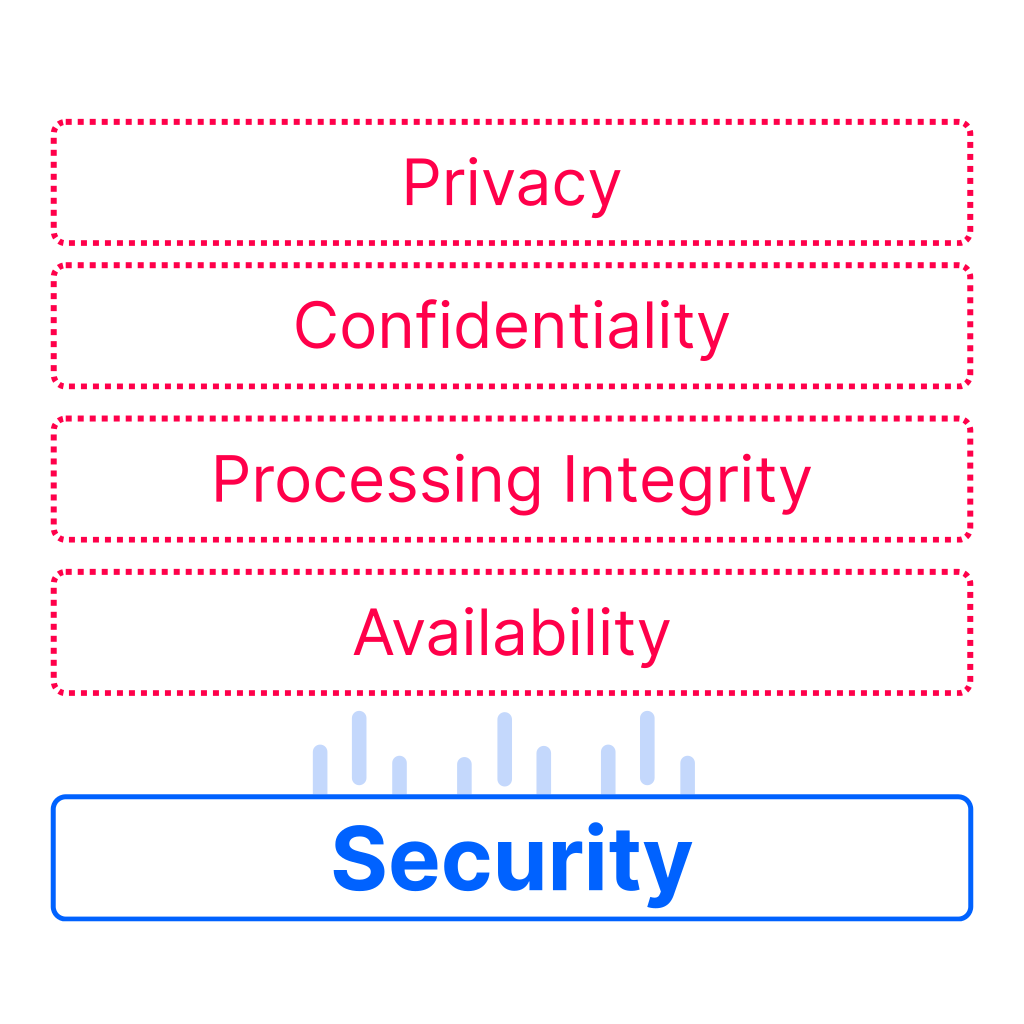
SOC 2 reports are built on five Trust Service Criteria that define how organizations should protect systems and data. Security is the required common criterion for every SOC 2 engagement and focuses on protecting systems against unauthorized access. This includes implementing and operating controls such as multi-factor authentication, encryption, access management, and continuous monitoring to reduce risk and detect threats quickly.
The other four criteria are optional based on your service commitments, but they are increasingly expected by enterprise customers. Availability addresses whether systems remain accessible according to service level agreements. Processing Integrity confirms systems process data completely, accurately, and as intended. Confidentiality protects information designated as confidential throughout its lifecycle. Privacy covers the collection, use, retention, disclosure, and disposal of personal information. Organizations choose the criteria that align with customer commitments and the nature of the services they provide.
SOC 2 Type 1 vs. Type 2: Choosing the Right Path
SOC 2 Type 1 reports assess whether your controls are suitably designed at a specific point in time. This makes Type 1 a practical choice for organizations early in their compliance journey or those that need to satisfy initial customer requests while maturing their security program.
SOC 2 Type 2 reports evaluate both control design and operating effectiveness over a defined review period, typically 6 to 12 months. Because Type 2 demonstrates that controls are not only documented but consistently working in practice, it provides stronger assurance to customers and is generally expected for mature SaaS providers and organizations operating in regulated sectors. In many cases, organizations pursue Type 1 first as a strategic stepping stone toward Type 2 certification.
Who Needs SOC 2 Certification?
SOC 2 primarily applies to service organizations that store, process, or transmit customer data in cloud-based environments. This includes Software as a Service providers, cloud infrastructure companies, managed service providers, data centers, business process outsourcing firms, and other technology companies that handle sensitive information as part of service delivery.
The need is especially urgent in sectors where trust and data handling rigor are heavily scrutinized. Healthcare technology companies managing PHI, financial technology platforms processing payment or account data, HR and payroll providers handling employee records, and cybersecurity vendors with access to client networks often face elevated SOC 2 expectations. For many teams, SOC 2 becomes a clear priority during enterprise sales cycles when security questionnaires and vendor risk assessments require objective evidence of third-party validated controls.
The Business Value of SOC 2 Compliance
SOC 2 certification delivers value far beyond checking a compliance box. It can accelerate enterprise sales by proactively addressing due diligence concerns that otherwise stall deals. Instead of repeatedly proving your security posture from scratch, you can provide a standardized, auditor-verified report that gives procurement, legal, and security stakeholders greater confidence early in the buying process.
It also reduces the operational burden of responding to hundreds of unique security questionnaires by centralizing assurance in a recognized framework. Internally, the certification process strengthens your security program by revealing control gaps, formalizing incident response procedures, and establishing continuous monitoring practices that improve resilience over time.
In many organizations, SOC 2 also supports lower cyber insurance costs and helps satisfy contractual obligations with regulated customers and partners. Maintaining certification year after year demonstrates ongoing commitment to security maturity, signaling that your organization treats trust as an operating principle, not a one-time milestone.