Understanding CAPTCHA, Turing Test

Originally Published: Oct. 6, 2025
By Tracey Birkenhauer, journalist and Chief Impact Officer, STACK Cybersecurity
We've all experienced it: the distorted text, the traffic light puzzles, or the "I'm not a robot" checkbox. These verification methods, known as CAPTCHAs, represent more than just minor inconveniences. They embody a fascinating intersection of cybersecurity, artificial intelligence history, and digital identity verification that continues to evolve.
What CAPTCHA Really Means
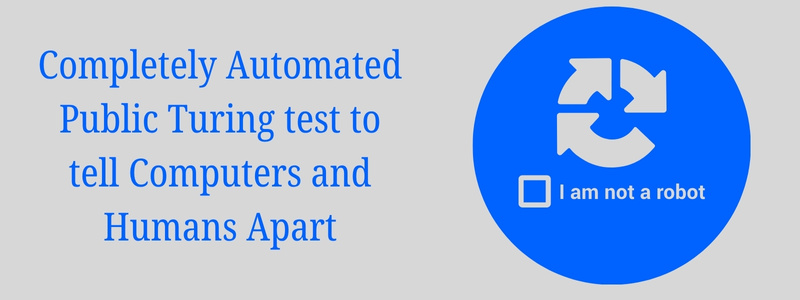
CAPTCHA stands for "Completely Automated Public Turing test to tell Computers and Humans Apart." That last word, "Turing," connects these everyday security measures to the foundational concepts of artificial intelligence and computational theory.
Turing Test Connection
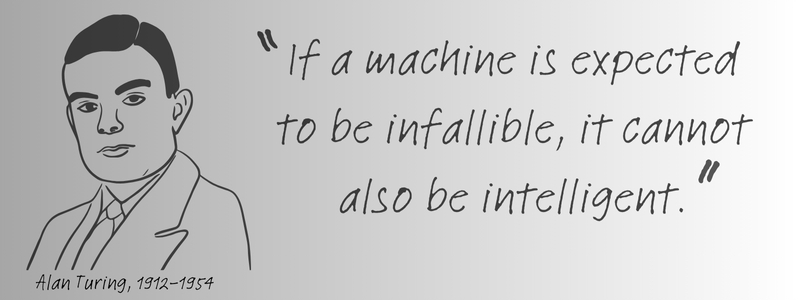
In 1950, British mathematician Alan Turing posed a revolutionary question in his seminal paper "Computing Machinery and Intelligence." He asked: "Can machines think?" His proposed assessment, now known as the Turing Test, presented a simple yet profound concept. If a human evaluator couldn't distinguish between responses from another human and a machine, then the machine demonstrated intelligence.
Modern CAPTCHAs function as simplified, automated versions of this test. Instead of conversation, websites challenge users to complete tasks that typically come naturally to humans but have historically challenged computers. CAPTCHA tests include recognizing distorted text, identifying specific objects in images, or distinguishing patterns.
Evolution of Human Verification
CAPTCHAs have undergone significant transformation since their introduction in the early 2000s.
Text-based CAPTCHAs were the first widespread implementation, presenting users with distorted words and numbers to transcribe. As optical character recognition technology advanced, these became increasingly complex until they were often unreadable even for humans.
Image-based CAPTCHAs emerged next, asking users to select specific objects like traffic lights, crosswalks, or storefronts. These leveraged the human ability to recognize objects in varied contexts, a task that previously challenged computer vision systems.
Google's reCAPTCHA represented a significant evolution, beginning as a book digitization project and transforming into increasingly subtle verification methods. The latest versions analyze user behavior patterns to determine human status without explicit challenges in many cases.
More recent alternatives like hCaptcha and Cloudflare's Turnstile emphasize privacy and user experience, focusing on behavioral analysis or cryptographic approaches that minimize friction while maintaining security.
CAPTCHA Controversy
CAPTCHAs have become ubiquitous across digital platforms, appearing in login systems, form submissions, and transaction processing. Most businesses integrate them as default components of security frameworks rather than through deliberate selection processes.
Security professionals generally view CAPTCHAs as cost-effective defenses against automated threats, including credential stuffing, account takeover attempts, and form spam. They provide a first line of defense without significant implementation costs.
However, several stakeholders raise valid concerns about their widespread use. Accessibility advocates highlight how CAPTCHAs create significant barriers for users with visual impairments, cognitive disabilities, or language differences. User experience specialists point to measurable impacts on conversion rates and customer satisfaction. Privacy researchers note how modern verification systems often collect extensive behavioral data without transparent disclosure.
From a cybersecurity perspective, CAPTCHAs exist in an increasingly complex landscape of verification technologies.
"What makes modern CAPTCHAs particularly interesting is their evolutionary arms race with AI systems," said Tracey Birkenhauer, Chief Impact Officer of STACK Cybersecurity. "As machine learning models become more sophisticated at solving traditional verification challenges, we're seeing a shift toward behavioral analysis and contextual signals that are harder for automated systems to simulate consistently.
"The irony is that CAPTCHAs were designed to distinguish humans from machines, but they've simultaneously accelerated machine learning advancement in computer vision and pattern recognition."
Algorithmic Transparency
The Turing Test concept extends far beyond these everyday verification mechanisms into profound ethical considerations for artificial intelligence.
Transparency researchers suggest adapting Turing Test principles to evaluate whether AI explanations are comprehensible to humans. If a machine can explain its decision-making process in ways indistinguishable from human explanations, it might achieve a form of algorithmic transparency that builds trust.
As AI capabilities advance, philosophical questions emerge around potential machine consciousness. If a system genuinely passes comprehensive Turing Test evaluations, displaying apparently conscious behavior indistinguishable from humans, what moral obligations might humans have toward such entities? These questions transcend daily CAPTCHA interactions but demonstrate how Turing's framework continues to influence contemporary AI ethics.
Future of Human Verification
With advanced machine learning systems now routinely solving conventional CAPTCHAs, verification technology continues evolving. Current trends point toward several emerging approaches.
Invisible risk assessment systems analyze numerous behavioral signals, including mouse movements, typing patterns, and navigation behavior, to distinguish humans from automated systems without explicit challenges. These technologies leverage the subtle differences between human and machine interaction patterns.
Cryptographic proof systems require computational work that remains feasible for legitimate users but prohibitively expensive at scale for attackers. These approaches shift verification from human characteristics to device capabilities.
Passwordless authentication and strong multi-factor approaches reduce reliance on traditional gatekeeping mechanisms altogether. By verifying identity through possession factors (physical devices) and biometric elements, these systems can often bypass the need for traditional CAPTCHA challenges.
"The industry is moving toward risk-based authentication that considers multiple contextual factors rather than isolated challenges," said Rich Miller, CEO of STACK Cybersecurity. "The goal is balancing security needs with seamless user experiences through intelligent, adaptive verification systems."
Beyond the Checkbox
The next time you encounter a CAPTCHA, consider its significance beyond the momentary interruption. You're participating in a miniaturized version of the Turing Test, a living example of how fundamental AI concepts influence everyday digital experiences.
As verification technology evolves alongside advancing AI capabilities, the challenge remains finding equilibrium between security requirements and user experience. The most effective approaches will likely be those that accurately identify automated threats while becoming nearly invisible to legitimate users.
The enduring relevance of Turing's concepts reminds us that the boundaries between human and machine capabilities continue shifting, requiring constant innovation in how we establish digital trust and identity in an increasingly automated world.
Frequently Asked Questions (FAQs)
What does CAPTCHA stand for?
CAPTCHA stands for "Completely Automated Public Turing test to tell Computers and Humans Apart." It is a verification method designed to help websites distinguish human users from automated bots.
How is CAPTCHA connected to the Turing Test?
CAPTCHA is a simplified, automated version of the Turing Test. Instead of using conversation to evaluate whether a machine can appear human, CAPTCHA uses tasks such as identifying images, reading distorted text, or analyzing behavior to determine whether a user is likely human.
Why do websites use CAPTCHA?
Websites use CAPTCHA to reduce automated abuse, including form spam, credential stuffing, fake account creation, and account takeover attempts. CAPTCHA acts as a first layer of defense against bots before stronger authentication or fraud controls are needed.
Why are CAPTCHAs controversial?
CAPTCHAs can create accessibility barriers for users with visual impairments, cognitive disabilities, or language differences. They can also frustrate users, reduce form completion rates, and raise privacy concerns when behavioral data is collected to determine whether someone is human.
Can AI solve CAPTCHAs?
Yes. As machine learning and computer vision systems have improved, many traditional CAPTCHA challenges have become easier for AI to solve. This has pushed verification technology toward behavioral analysis, risk-based authentication, and other methods that are harder for automated systems to mimic consistently.
What are alternatives to CAPTCHA?
Modern alternatives include invisible risk assessment, behavioral analysis, cryptographic proof systems, passwordless authentication, and strong multi-factor authentication. These approaches aim to reduce user friction while still protecting websites from automated threats.
Are CAPTCHAs enough to stop bots?
No. CAPTCHAs can help reduce automated abuse, but they should not be treated as a complete security solution. Businesses should combine them with layered controls such as rate limiting, bot detection, secure authentication, monitoring, and incident response procedures.
What is the future of human verification?
Human verification is moving toward risk-based systems that evaluate multiple contextual signals instead of relying on a single challenge. The goal is to stop automated threats while making verification nearly invisible for legitimate users.
Work with STACK
If your business wants to understand its exposure or build stronger defenses, email info@stackcyber.com or call (734) 744-5300.